
![SYNTHESIS [2026] in light blue text.](https://irp.cdn-website.com/f969fb45/dms3rep/multi/opt/TB_Horizontal_White-b3af8ef2-1920w.png)
Measure The Trust That Drives Performance
Gain clear, actionable insights into how employees experience leadership, communication, accountability, and teamwork through TrustBuilder's research-backed employee trust survey.
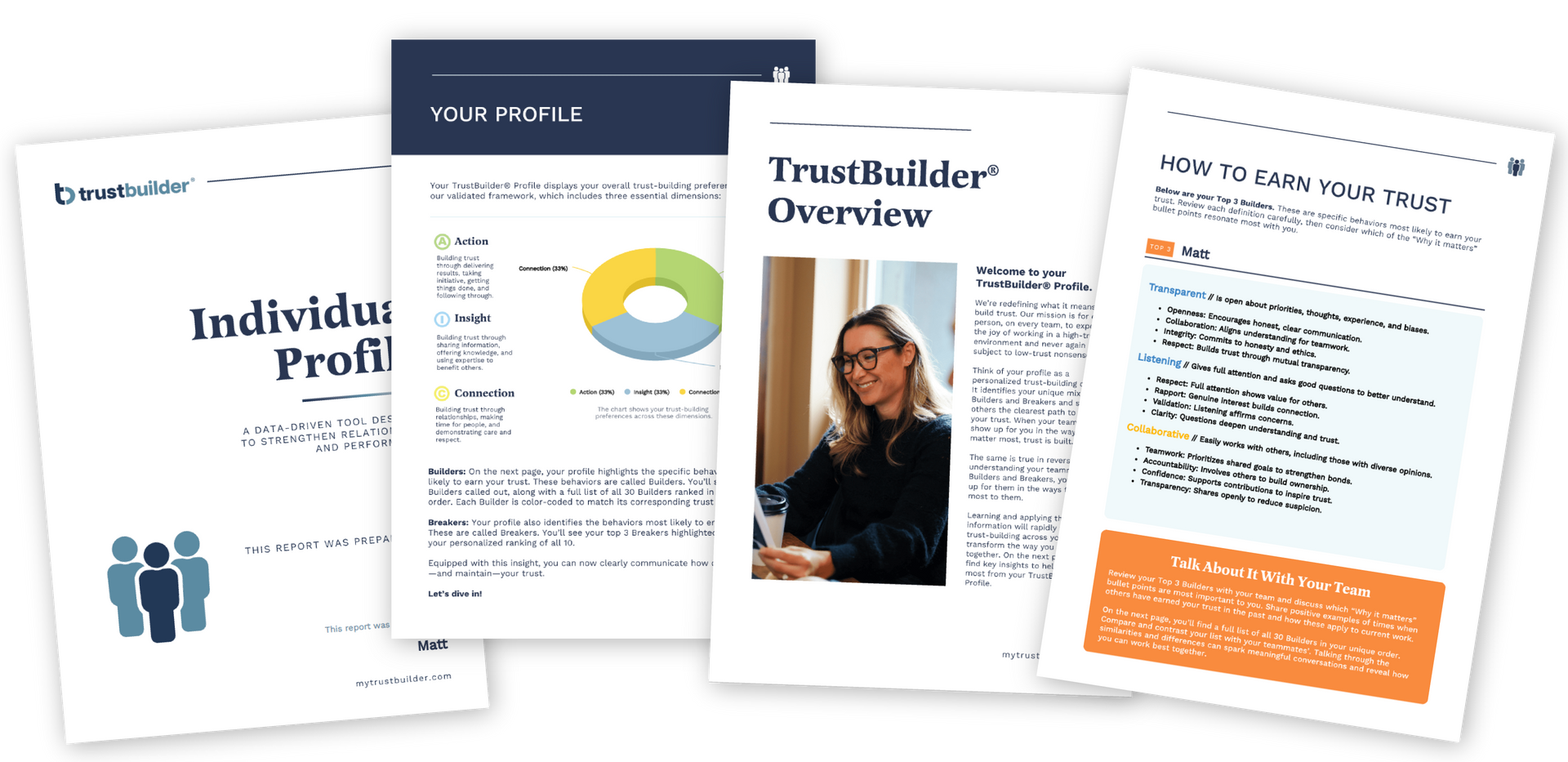
Trust gaps are quietly sabotaging growth.
Trust gaps rarely make noise, but they quietly erode revenue, loyalty, and reputation.
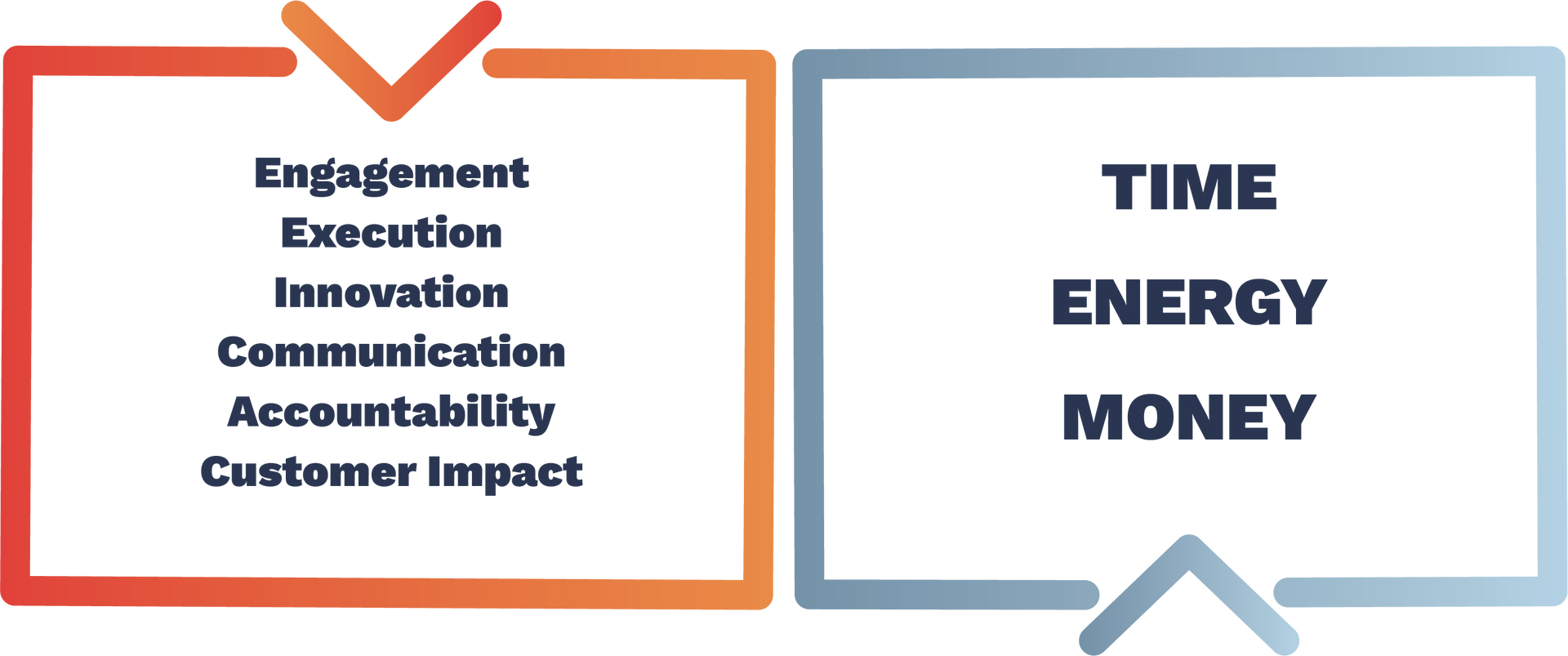
Trust Builds Commitment.
Commitment Builds Loyalty.
74%
Less Stress in high-trust environtments
40%
Less Burnout among teams in high-trust cultures
76%
More Efficiency among high-trust teams
92%
Happier at Home when!
What do our customers have to say?
"I learned that my paralegal is all about positivity, so I would say something over the top positive to her, and we would laugh, then start the day from a positive point. TrustBuilder has been very positive as a whole for the complany".
How It Works
1
Measure Trust
We design surveys around your culture, mission, and values - blending our trust framework with your company’s own language so results are real and actionable.
2
Pinpoint Gaps
Identify where trust is strong and where it breaks down, then focus on the gaps that matter most.
3
Take Action
Get insights that make it possible to create targeted training, process improvements, and follow-up strategies that turn feedback into a clear, actionable playbook for your team
Do you work on a high trust team?
Let's find out.
Trust:
The Hidden Advantage
Your business is always in a competitive posture, and that means you are hyper-focused on improving the quality of your products or services and encouraging your team to satisfy the demands of your clients and customers.
Contact Us Today!But what if the most significant hurdle to achieving the success you want is not your competition but your own company culture? Even well-run businesses staffed by top achievers can have trouble identifying when trust is lacking in their organizations. When trust levels are low, misgivings, doubts, miscommunication, self-interest, and lack of commitment can hold your team back from reaching their full potential — and achieving success for your enterprise.
At its most fundamental level, trust within your workforce means that everyone in your organization feels confident that their colleagues “have their back.” Trust is the bulwark necessary in every relationship to weather adversity and overcome challenges. If trust is absent in any relationship within your organization, whether between management and workforce, within operational teams, or from person to person, your organization is handicapped in its ability to perform.
TrustBuilder is dedicated to helping companies cultivate high-trust work environments that drive engagement, collaboration, and performance. Trust is not just a feel-good platitude but a critical driver of organizational success. Businesses that prioritize trust see measurable improvements in employee satisfaction, productivity, and overall company performance. What can your business achieve through building trust?
FAQ's
What Is the TrustBuilder® Organization Profile?
TrustBuilder is an organizational trust platform that helps businesses measure, build, maintain, and repair trust across every level of the organization. Through employee and customer research, leadership coaching, team development, and actionable insights, TrustBuilder helps organizations identify the behaviors that strengthen trust and the barriers that prevent teams from performing at their best.
Unlike traditional engagement surveys, TrustBuilder focuses specifically on trust—the foundation of healthy cultures, effective leadership, and high-performing teams.
Why is trust important in the workplace?
Trust is one of the strongest predictors of organizational performance. When employees trust their leaders and one another, they communicate more openly, collaborate more effectively, adapt to change faster, and are more willing to take ownership of their work.
Organizations with high trust often experience:
- Higher employee engagement
- Stronger retention
- Better teamwork
- Increased innovation
- Improved customer experiences
- Healthier workplace culture
When trust breaks down, communication suffers, turnover increases, and performance often declines.
How do you measure trust?
Trust can be measured through carefully designed research that evaluates how people experience leadership, communication, accountability, relationships, and organizational consistency.
TrustBuilder uses a research-backed framework built around three core Trust Builders:
- Action – Following through, accountability, and reliability.
- Insight – Communication, clarity, and understanding.
- Connection – Relationships, empathy, and genuine care.
The assessments also identify Trust Breakers—behaviors that reduce confidence and create friction within teams. Together, these insights provide leaders with a clear picture of organizational trust and practical recommendations for improvement.
What industries does TrustBuilder work with?
TrustBuilder works with organizations of all sizes across a wide range of industries, including:
- Manufacturing
- Healthcare
- Financial Services
- Education
- Government
- Professional Services
- Construction
- Nonprofits
- Sports Organizations
- Technology
Because trust is fundamental to every workplace, the TrustBuilder framework is designed to adapt to organizations regardless of industry or size.
How long does a trust assessment take?
Most TrustBuilder assessments take between 7 and 15 minutes to complete.
The surveys are intentionally concise to encourage participation while gathering meaningful insights. Employees can complete assessments on any device, and organizations typically receive reporting shortly after the survey closes.
What happens after an assessment?
After an assessment is complete, TrustBuilder transforms survey responses into actionable insights.
Organizations receive dashboards and reports that highlight strengths, opportunities, and trends across teams and departments. Leaders can identify areas where trust is thriving and where additional support may be needed.
Many organizations continue with facilitated team sessions, leadership coaching, or strategic planning workshops to turn insights into measurable improvements.
Can TrustBuilder work with remote or hybrid teams?
Yes.
TrustBuilder was designed to support organizations regardless of where employees work. Surveys, dashboards, coaching, and team sessions can all be delivered in-person, virtually, or through hybrid formats.
Because trust becomes even more important when teams are geographically distributed, organizations often use TrustBuilder to strengthen communication, alignment, and connection across remote teams.
What makes TrustBuilder different?
Most workplace surveys measure engagement or satisfaction. TrustBuilder focuses on the underlying behaviors that influence both.
Rather than simply reporting how employees feel, TrustBuilder identifies the specific actions, communication patterns, and relationship dynamics that build or break trust.
Organizations receive practical recommendations—not just data—allowing leaders to prioritize improvements that have the greatest impact on culture, performance, and long-term success.
Can trust really be measured?
Yes.
While trust is often thought of as intangible, decades of organizational research have shown that trust is built through observable behaviors and experiences. Employees consistently evaluate whether leaders communicate clearly, follow through on commitments, demonstrate competence, act with integrity, and genuinely care about others.
By measuring these behaviors, organizations gain objective insights into the current level of trust and identify specific opportunities for improvement.
How long does it take to improve trust?
The timeline depends on the organization's starting point and commitment to action.
Some organizations see measurable improvements within a few months by addressing communication, accountability, and leadership behaviors. More significant cultural change often occurs over six to eighteen months through consistent leadership development, ongoing measurement, and intentional team practices.
Building trust is not a one-time initiative—it is an ongoing process of reinforcing behaviors that create confidence and strengthen relationships over time.
Why should organizations measure trust regularly?
Trust changes as organizations grow, leaders change, priorities shift, or teams experience periods of uncertainty.
Measuring trust on a regular basis allows leaders to monitor progress, identify emerging challenges early, and evaluate whether improvement initiatives are producing meaningful results. Many organizations measure trust annually or semi-annually to create benchmarks and track long-term trends.
